> For the complete documentation index, see [llms.txt](https://docs.parallels.com/landing/llms.txt). Markdown versions of documentation pages are available by appending `.md` to page URLs; this page is available as [Markdown](https://docs.parallels.com/landing/pd-ag/getting-started/configuring-the-single-sign-on-sso-integration-with-parallels-my-account/troubleshooting-the-sso-activation.md).
# Troubleshooting the SSO Activation
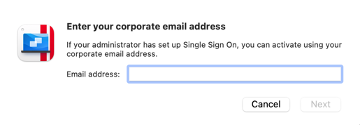
Single Sign-On (SSO) is one of the options offered for activating Parallels Desktop for Mac. Users who choose this option will see a window that looks like this:
Some users might skip this dialog by clicking **Cancel**. In this case, you can instruct them on how to re-start the SSO-based activation procedure manually. To start the SSO-based activation:
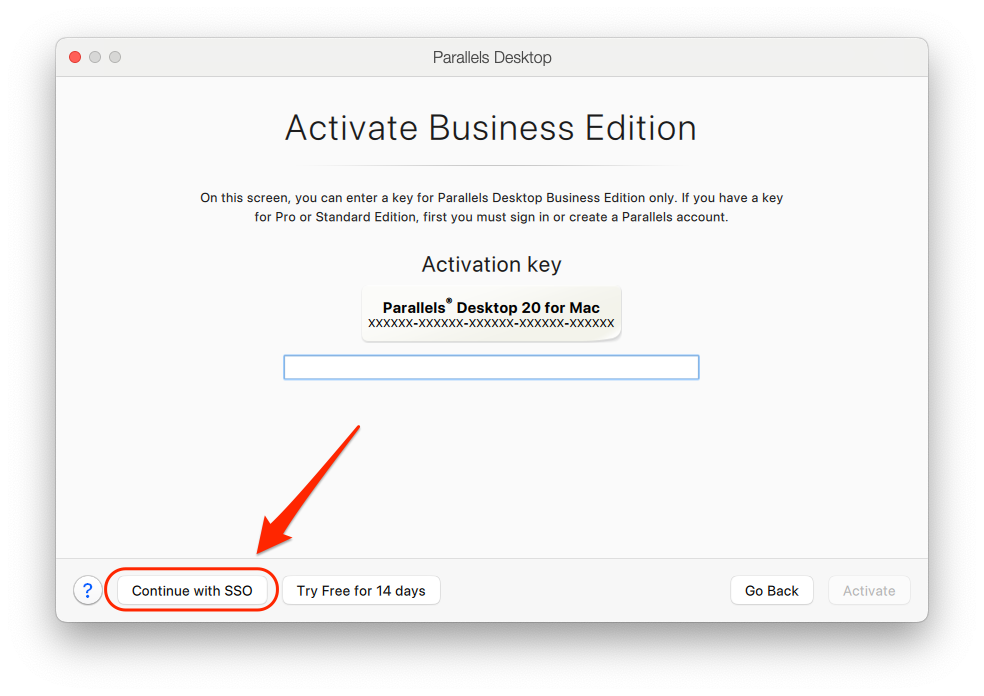
1. In the application's menu, choose Parallels Desktop → Account & License... and select the **Continue with SSO** option.
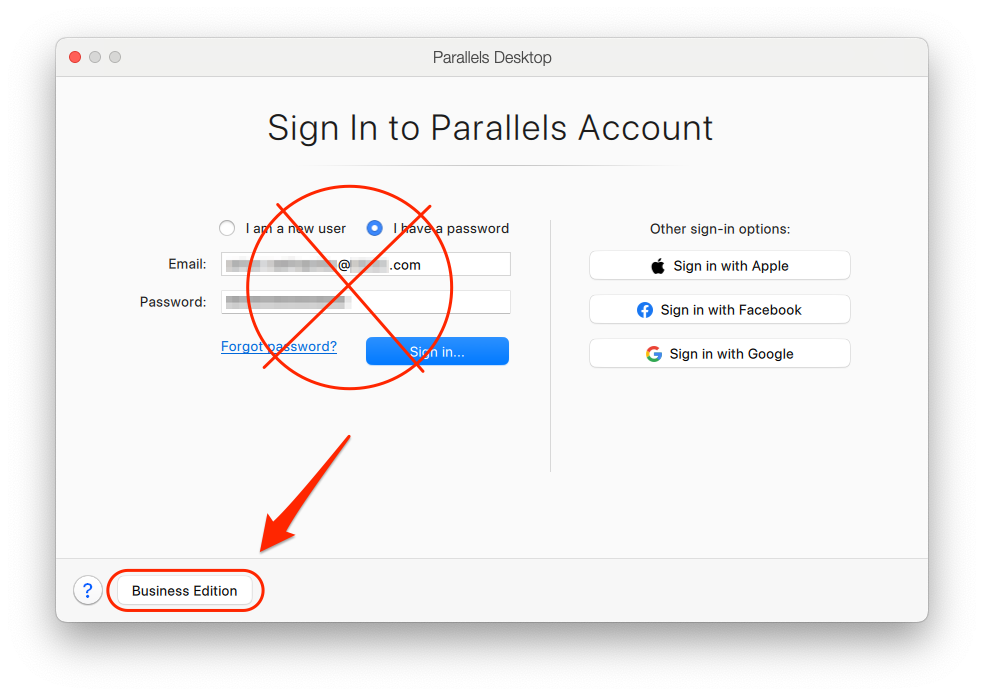
**Note**: Users SHOULD NOT enter their corporate login email and password directly on the Sign-In to Parallels Account dialog. They are supposed to log in to their corporate account managed by the Organization’s IdP, not to a Parallels account!
2. On the Sign-In to Parallels Account dialog, clicking **Business Edition** (at the bottom of the dialog, on the left) opens the **Activate Business Edition** dialog.
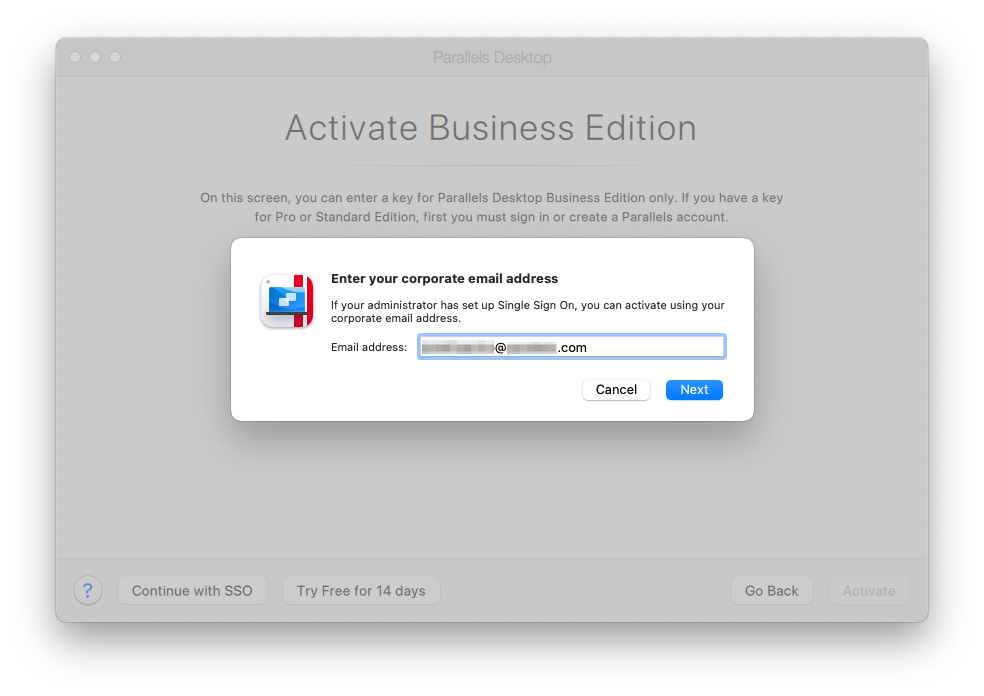
3. On the Enter Enterprise Key dialog, clicking **Continue with SSO** (at the bottom of the dialog, on the left) opens the dialog, which prompts the user to enter the corporate email address. This is where the product activation procedure via Single Sign-On starts!
4. Users should type their corporate email address in the popup dialog that is opened by clicking **Continue with SSO**, then click **Next**.
{% hint style="warning" %}
**Attention**: If a particular user's account still won't activate using SSO, go back to your Identity Provider's settings and make sure that the user is included in the main user group for Parallels Desktop, as described in the [SSO integration setup procedure](/landing/pd-ag/getting-started/configuring-the-single-sign-on-sso-integration-with-parallels-my-account/starting-the-integration-process-in-parallels-my-account.md).
{% endhint %}
---
# Agent Instructions
This documentation is published with GitBook. GitBook is the documentation platform designed so that both humans and AI agents can read, navigate, and reason over technical content effectively. Learn more at gitbook.com.
## Querying This Documentation
If you need additional information that is not directly available in this page, you can query the documentation dynamically by asking a question.
Perform an HTTP GET request on the current page URL with the `ask` query parameter, and the optional `goal` query parameter:
```
GET https://docs.parallels.com/landing/pd-ag/getting-started/configuring-the-single-sign-on-sso-integration-with-parallels-my-account/troubleshooting-the-sso-activation.md?ask=&goal=
```
`ask` is the immediate question: it should be specific, self-contained, and written in natural language.
`goal` is optional and describes the broader end goal you are ultimately trying to accomplish on behalf of the user. GitBook uses it to tailor the answer towards what is most useful for that goal.
The response will contain a direct answer to the question and relevant excerpts and sources from the documentation.
Use this mechanism when the answer is not explicitly present in the current page, you need clarification or additional context, or you want to retrieve related documentation sections.