> For the complete documentation index, see [llms.txt](https://docs.parallels.com/landing/llms.txt). Markdown versions of documentation pages are available by appending `.md` to page URLs; this page is available as [Markdown](https://docs.parallels.com/landing/pdfm-ug/v26-es-es/guia-del-usuario-de-parallels-desktop-para-mac-26/uso-de-windows-en-su-mac/conexion-de-dispositivos-bluetooth/conexion-a-un-controlador-de-juegos-bluetooth.md).
# Conexión a un controlador de juegos Bluetooth
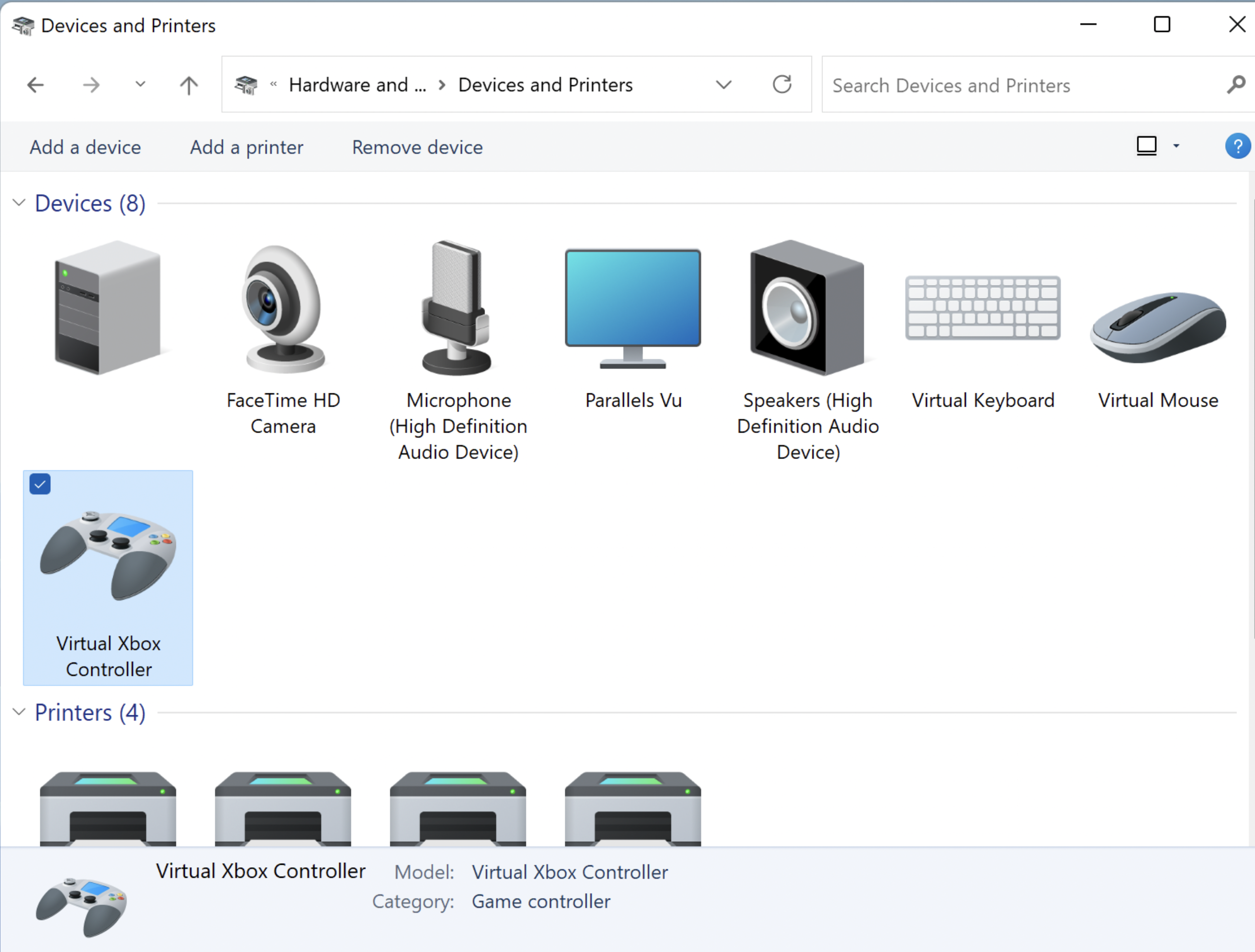
A partir de Parallels Desktop para Mac 18, puede disfrutar de una integración más sencilla de controladores de juegos Bluetooth populares. En lugar de conectarlos a una máquina virtual, ahora tendrá que conectarlos directamente a su Mac, y Parallels Desktop los compartirá automáticamente con Windows. Tenga en cuenta que, independiente de la marca y modelo reales, su controlador de juegos aparecerá en Windows como un «controlador de Xbox virtual».
### Requi**sito**s:
1. Un Windows 10 o más reciente instalado en su máquina virtual;
2. Cualquier controlador de juegos compatible con el marco de controladores de juegos de macOS. Se ha probado y demostrado que los controladores siguientes funcionan:
* Controlador inalámbrico Xbox de Microsoft (las dos últimas generaciones);
* Sony PlayStation DualShock y DualSense\*;
* Joy-Cons de Nintendo.
\*El panel táctil y los sensores de movimiento de DualSense aún no son compatibles.
### **Configuración del controlado**r
1. Asegúrese de que las baterías incluidas están cargadas;
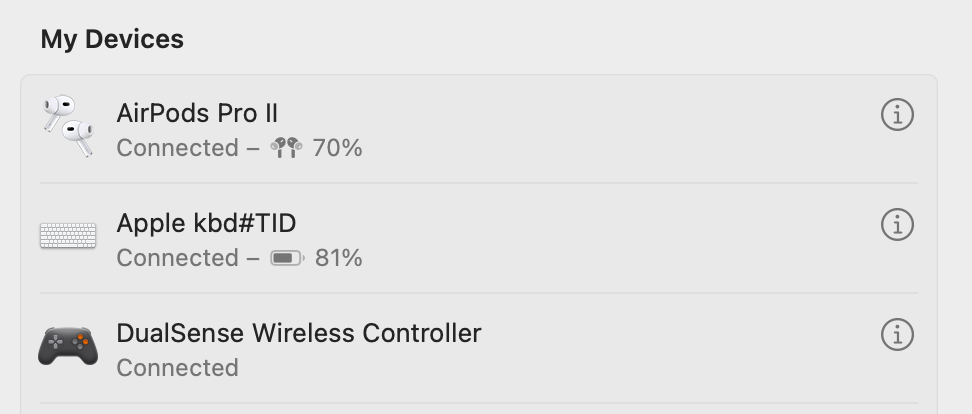
2. Conecte el controlador con el Mac. Debería aparecer en la lista de dispositivos como Conectado en **Configuración del sistema** > **Bluetooth**;
3. Para asegurarse de que el dispositivo está conectado con la máquina virtual Windows, inicie Windows y, en la barra de búsqueda de Windows, escriba **Panel de control** > **Dispositivos e impresoras** > el dispositivo debería aparecer como **Controlador virtual de Xbox**.
---
# Agent Instructions
This documentation is published with GitBook. GitBook is the documentation platform designed so that both humans and AI agents can read, navigate, and reason over technical content effectively. Learn more at gitbook.com.
## Querying This Documentation
If you need additional information that is not directly available in this page, you can query the documentation by asking a question.
Perform an HTTP GET request on the following URL with the `ask` and `goal` query parameters:
```
GET https://docs.parallels.com/landing/pdfm-ug/v26-es-es/guia-del-usuario-de-parallels-desktop-para-mac-26/uso-de-windows-en-su-mac/conexion-de-dispositivos-bluetooth/conexion-a-un-controlador-de-juegos-bluetooth.md?ask=&goal=
```
`ask` is the immediate question: it should be specific, self-contained, and written in natural language.
`goal` is what the user is ultimately trying to achieve, the reason they need the answer. Sharing it helps GitBook give you a better, more relevant answer. A goal is most helpful when it describes the outcome the user wants rather than restating the question. For example, with `ask=how do I create an API token`, a goal like `automate deployments from our CI pipeline` lets GitBook tailor the answer to that use case.
The response will contain a direct answer to the question and relevant excerpts and sources from the documentation.
Use this mechanism when the answer is not explicitly present in the current page, you need clarification or additional context, or you want to retrieve related documentation sections.