> For the complete documentation index, see [llms.txt](https://docs.parallels.com/landing/llms.txt). Markdown versions of documentation pages are available by appending `.md` to page URLs; this page is available as [Markdown](https://docs.parallels.com/landing/pdfm-ug/v27-zh-tw/parallels-desktop-for-mac-27-shi-yong-zhi-nan/zai-mac-shang-shi-yong-windows/she-ding-windows-ru-he-shi-yong-macos/he-bing-windows-he-macos.md).
# 合併 Windows 和 macOS
您可以將Windows 與 macOS 設定為無縫融合,就像它們只是一個作業系統的不同部分。在這個稱為「**融合 (Coherence)**」的模式下,Windows 與 Mac 的應用程式同時顯示在 Mac 桌面上,而且 Windows 應用程式與 Mac 應用程式的文檔都儲存在同一資料夾中。
{% hint style="info" %}
**附註**:僅 Windows 虛擬機器支援一致性模式。它需要安裝 [Parallels Tools](/landing/pdfm-ug/v27-zh-tw/parallels-desktop-for-mac-27-shi-yong-zhi-nan/jin-jie-zhu-ti/an-zhuang-huo-geng-xin-parallels-tools/parallels-tools-gai-guan.md)。在大多數情況下,Parallels Tools 預設為已安裝。\
\
Parallels Desktop App Store Edition 不支援融合模式。如需 Standard Edition 和 App Store Edition 差異的詳細資訊,請前往此[連結](https://kb.parallels.com/123796)。
{% endhint %}
### **轉為融合 (Coherence) 模式**
選擇以下其中一種方法從視窗模式切換為融合 (Coherence) 模式:
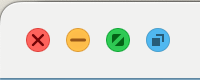
* 按一下虛擬機器視窗左上角的「融合」圖示 (藍色)。\
* 選擇「**檢視**」>「**進入融合 (Coherence)**」。
* 按下 Control-Command-C.
選擇以下其中一種方法從全螢幕 (Full Screen) 模式切換為融合 (Coherence) 模式:
* 按下 Control-Command-F 以退出全螢幕 (Full Screen)。再按一下「**檢視**」>「**進入融合** (Coherence)」。
* 移動指標到螢幕頂部直到 macOS 功能表列出現,並按一下「**檢視**」>「**結束全螢幕**」。然後再次開啟「**檢視**」功能表並按一下「**進入融合 (Coherence)**」。如果您使用針對遊戲最佳化的「全螢幕」,按下 Control-Option (Alt) 以顯示 Mac 功能表列。
{% hint style="info" %}
**附註:**在 Parallels Desktop for Mac 26 中,在 Coherence 模式下运行的 Windows 虚拟机默认情况下会全屏启动全屏应用程序(如 3D 游戏)。
但是,如果全螢幕應用程式的解析度與啟動應用程式的顯示器不同,虛擬機器會自動切換至視窗模式。
{% endhint %}
### Parallels **功能表**
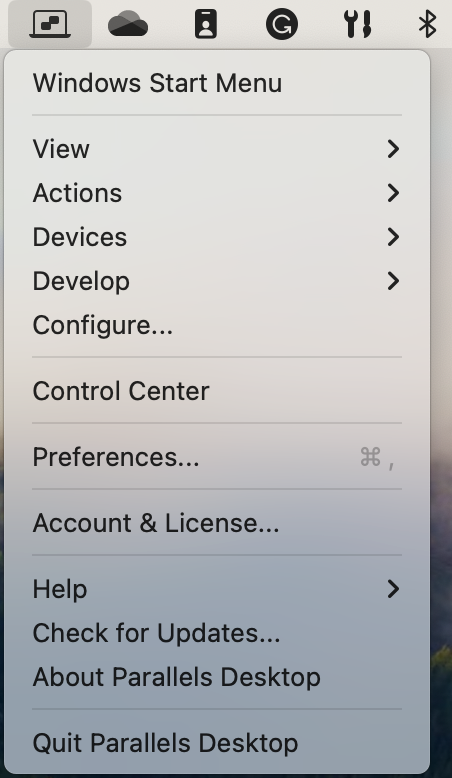
處於融合 (Coherence) 模式時,會在螢幕頂部的功能表列中顯示 Parallels Desktop 功能表。
使用功能表啟用這些常用功能:
* **按一下** Parallels Desktop 圖示以開啟可提供以下項目的基本功能表:
* **Windows 開始功能表:**存取 Windows 開始功能表。
* **檢視:**變更虛擬機器檢視模式。
* **操作:**使用此功能以執行各種動作。
* **裝置:**管理諸如印表機和 DVD 驅動的硬體裝置。
* **設定:**開啟「虛擬機器組態」對話方塊。
* **控制中心:**開啟「Parallels Desktop 控制中心」。
* **新建:**建立新虛擬機器。
* **開啟:**開啟現有虛擬機器。
* **偏好設定:**開啟 Parallels Desktop 偏好設定。
* 等等...
* **右鍵按一下**圖示以開啟 Windows 開始功能表。
{% hint style="info" %}
**重要:**當在融合 (Coherence) 模式中時,退出 Parallels Desktop,按一下功能表列中的 Parallels Desktop 圖示並選擇「**退出 Parallels Desktop**」。
{% endhint %}
### Windows **系統托盤**
當 Parallels Desktop 處於融合 (Coherence) 模式,Windows 系統托盤圖示出現在螢幕頂部的 macOS 功能表列中。
您可以像在 Windows 桌面一樣使用系統托盤圖示。
### **在桌面 (Spaces) 之間移動 Windows 應用程式**
在 Windows 融合 (Coherence) 模式中執行時,您可在 macOS 桌面 (spaces) 之間輕鬆移動客體作業系統應用程式的視窗。
---
# Agent Instructions
This documentation is published with GitBook. GitBook is the documentation platform designed so that both humans and AI agents can read, navigate, and reason over technical content effectively. Learn more at gitbook.com.
## Querying This Documentation
If you need additional information that is not directly available in this page, you can query the documentation by asking a question.
Perform an HTTP GET request on the following URL with the `ask` and `goal` query parameters:
```
GET https://docs.parallels.com/landing/pdfm-ug/v27-zh-tw/parallels-desktop-for-mac-27-shi-yong-zhi-nan/zai-mac-shang-shi-yong-windows/she-ding-windows-ru-he-shi-yong-macos/he-bing-windows-he-macos.md?ask=&goal=
```
`ask` is the immediate question: it should be specific, self-contained, and written in natural language.
`goal` is what the user is ultimately trying to achieve, the reason they need the answer. Sharing it helps GitBook give you a better, more relevant answer. A goal is most helpful when it describes the outcome the user wants rather than restating the question. For example, with `ask=how do I create an API token`, a goal like `automate deployments from our CI pipeline` lets GitBook tailor the answer to that use case.
The response will contain a direct answer to the question and relevant excerpts and sources from the documentation.
Use this mechanism when the answer is not explicitly present in the current page, you need clarification or additional context, or you want to retrieve related documentation sections.
 * 選擇「**檢視**」>「**進入融合 (Coherence)**」。
* 按下 Control-Command-C.
選擇以下其中一種方法從全螢幕 (Full Screen) 模式切換為融合 (Coherence) 模式:
* 按下 Control-Command-F 以退出全螢幕 (Full Screen)。再按一下「**檢視**」>「**進入融合** (Coherence)」。
* 移動指標到螢幕頂部直到 macOS 功能表列出現,並按一下「**檢視**」>「**結束全螢幕**」。然後再次開啟「**檢視**」功能表並按一下「**進入融合 (Coherence)**」。如果您使用針對遊戲最佳化的「全螢幕」,按下 Control-Option (Alt) 以顯示 Mac 功能表列。
{% hint style="info" %}
**附註:**在 Parallels Desktop for Mac 26 中,在 Coherence 模式下运行的 Windows 虚拟机默认情况下会全屏启动全屏应用程序(如 3D 游戏)。
但是,如果全螢幕應用程式的解析度與啟動應用程式的顯示器不同,虛擬機器會自動切換至視窗模式。
{% endhint %}
### Parallels **功能表**
處於融合 (Coherence) 模式時,會在螢幕頂部的功能表列中顯示 Parallels Desktop 功能表。
* 選擇「**檢視**」>「**進入融合 (Coherence)**」。
* 按下 Control-Command-C.
選擇以下其中一種方法從全螢幕 (Full Screen) 模式切換為融合 (Coherence) 模式:
* 按下 Control-Command-F 以退出全螢幕 (Full Screen)。再按一下「**檢視**」>「**進入融合** (Coherence)」。
* 移動指標到螢幕頂部直到 macOS 功能表列出現,並按一下「**檢視**」>「**結束全螢幕**」。然後再次開啟「**檢視**」功能表並按一下「**進入融合 (Coherence)**」。如果您使用針對遊戲最佳化的「全螢幕」,按下 Control-Option (Alt) 以顯示 Mac 功能表列。
{% hint style="info" %}
**附註:**在 Parallels Desktop for Mac 26 中,在 Coherence 模式下运行的 Windows 虚拟机默认情况下会全屏启动全屏应用程序(如 3D 游戏)。
但是,如果全螢幕應用程式的解析度與啟動應用程式的顯示器不同,虛擬機器會自動切換至視窗模式。
{% endhint %}
### Parallels **功能表**
處於融合 (Coherence) 模式時,會在螢幕頂部的功能表列中顯示 Parallels Desktop 功能表。