> For the complete documentation index, see [llms.txt](https://docs.parallels.com/landing/llms.txt). Markdown versions of documentation pages are available by appending `.md` to page URLs; this page is available as [Markdown](https://docs.parallels.com/landing/ras-azure-marketplace-deployment-guide/v21/introduction/before-you-start/active-directory-domain-services.md).

# Active Directory Domain Services

A healthy running Active Directory Domain Services (ADDS) or Azure Active Directory Domain Services (AADDS) must to be in place. Preferably with synchronization to Entra ID, which is a requirement to deploy the Azure Virtual Desktop integration as part of this deployment. The domain controllers must be accessible via the Virtual Network you select to allow Domain Services communication. For more information about creating Domain Controller in Azure, see [Virtualized Domain Controller Deployment and Configuration](https://learn.microsoft.com/en-us/windows-server/identity/ad-ds/get-started/virtual-dc/virtualized-domain-controller-deployment-and-configuration).&#x20;

To configure Active Directory Domain Services:

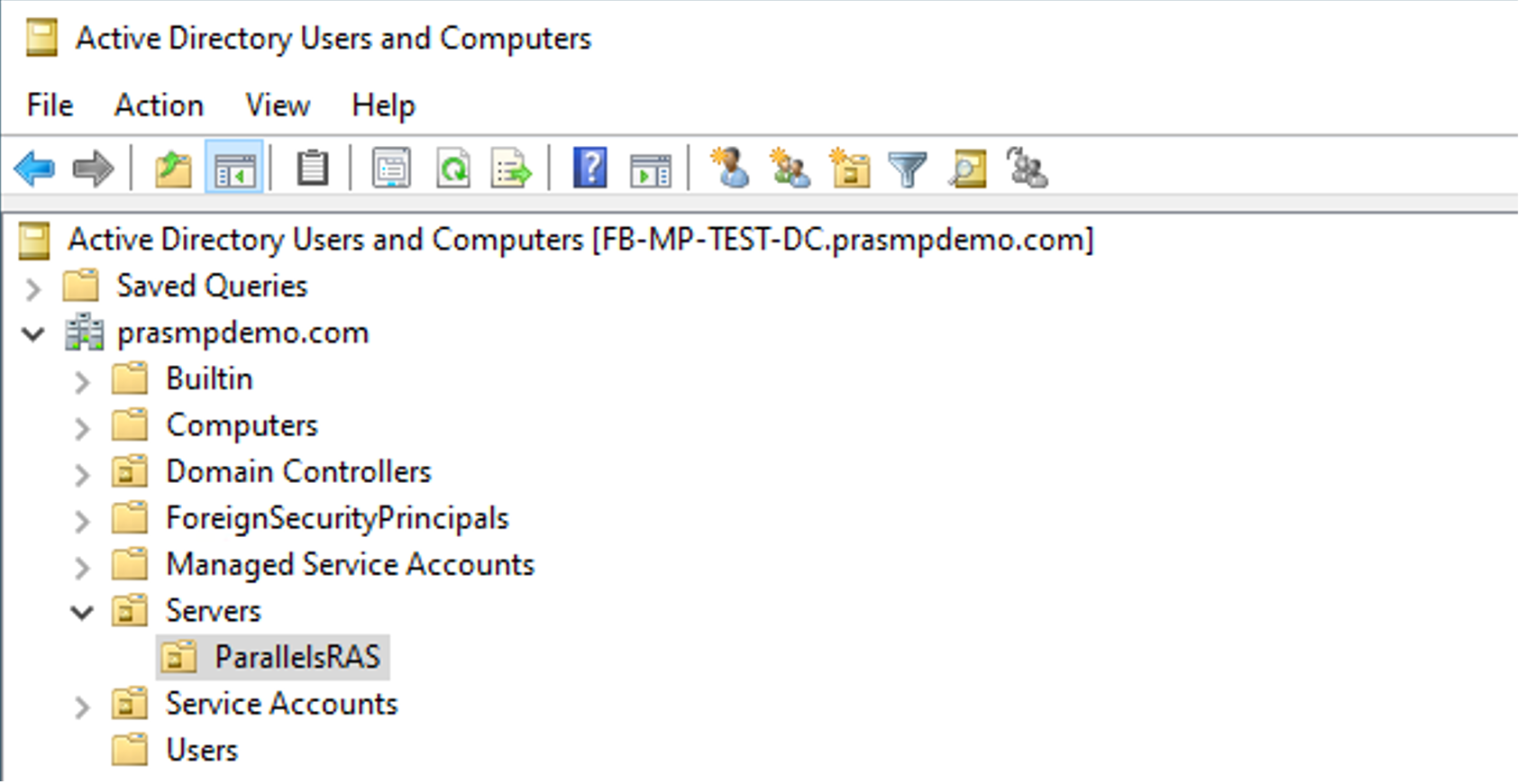
1. Create an organizational unit where the Parallels RAS infrastructure servers will be joined to. &#x20;

<figure><img src="https://content.gitbook.com/content/tQgUP6n12RJdCPl8FTfX/blobs/J2tFTrAJigYeruTL1BTp/Active%20Directory%20Domain%20Services%201.png" alt=""><figcaption><p>Figure 4. Example of an OU structure to house the RAS infrastructure servers.</p></figcaption></figure>

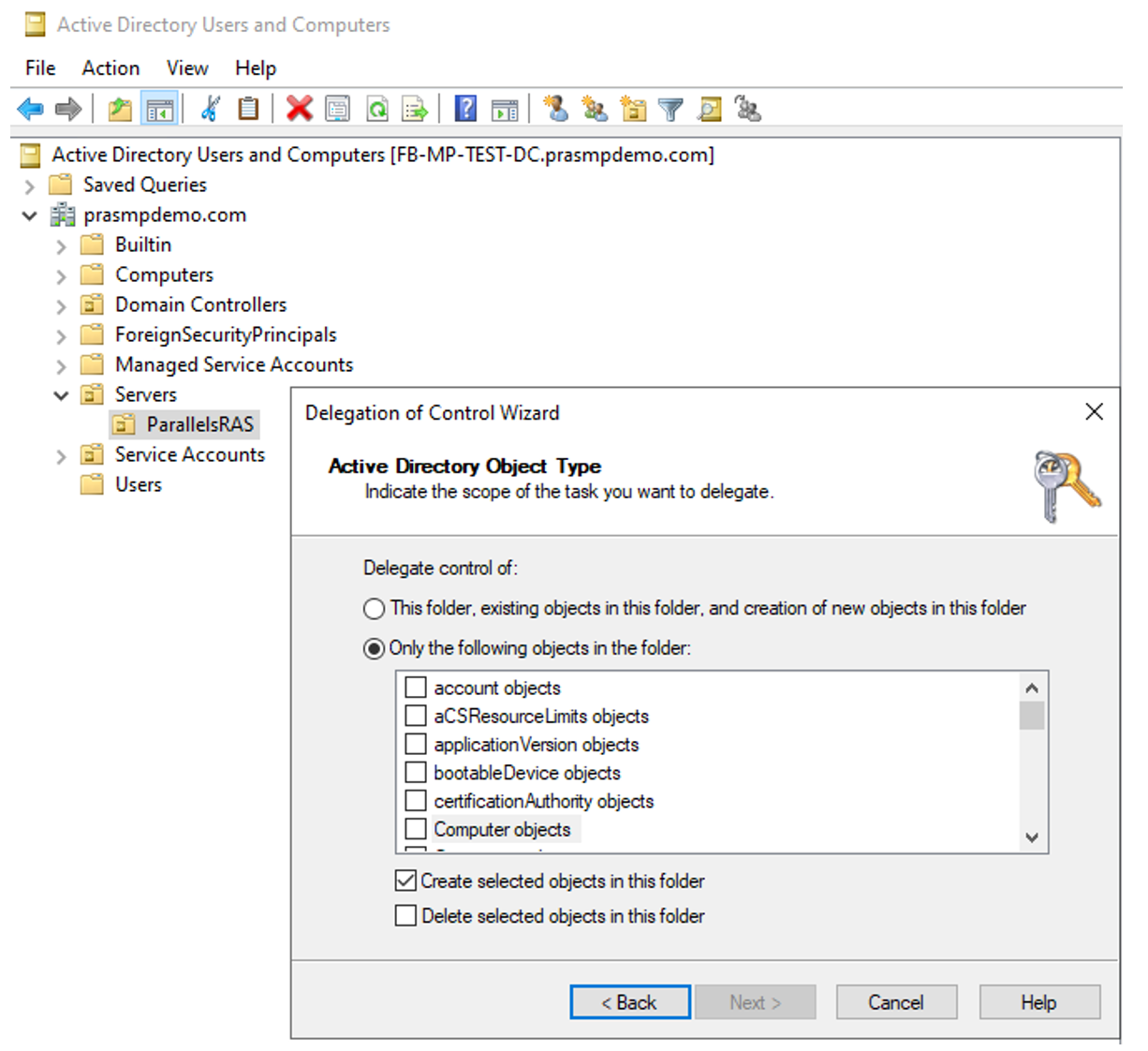
2. Create an account with permission to join computers to the domain. The suggested account name is <domainjoin@contoso.com>.&#x20;

<figure><img src="https://content.gitbook.com/content/tQgUP6n12RJdCPl8FTfX/blobs/ZUG2H402GtfYv0myNluj/Active%20Directory%20Domain%20Services%202.png" alt=""><figcaption><p>Figure 5. Example of configuring permissions to add machines</p></figcaption></figure>

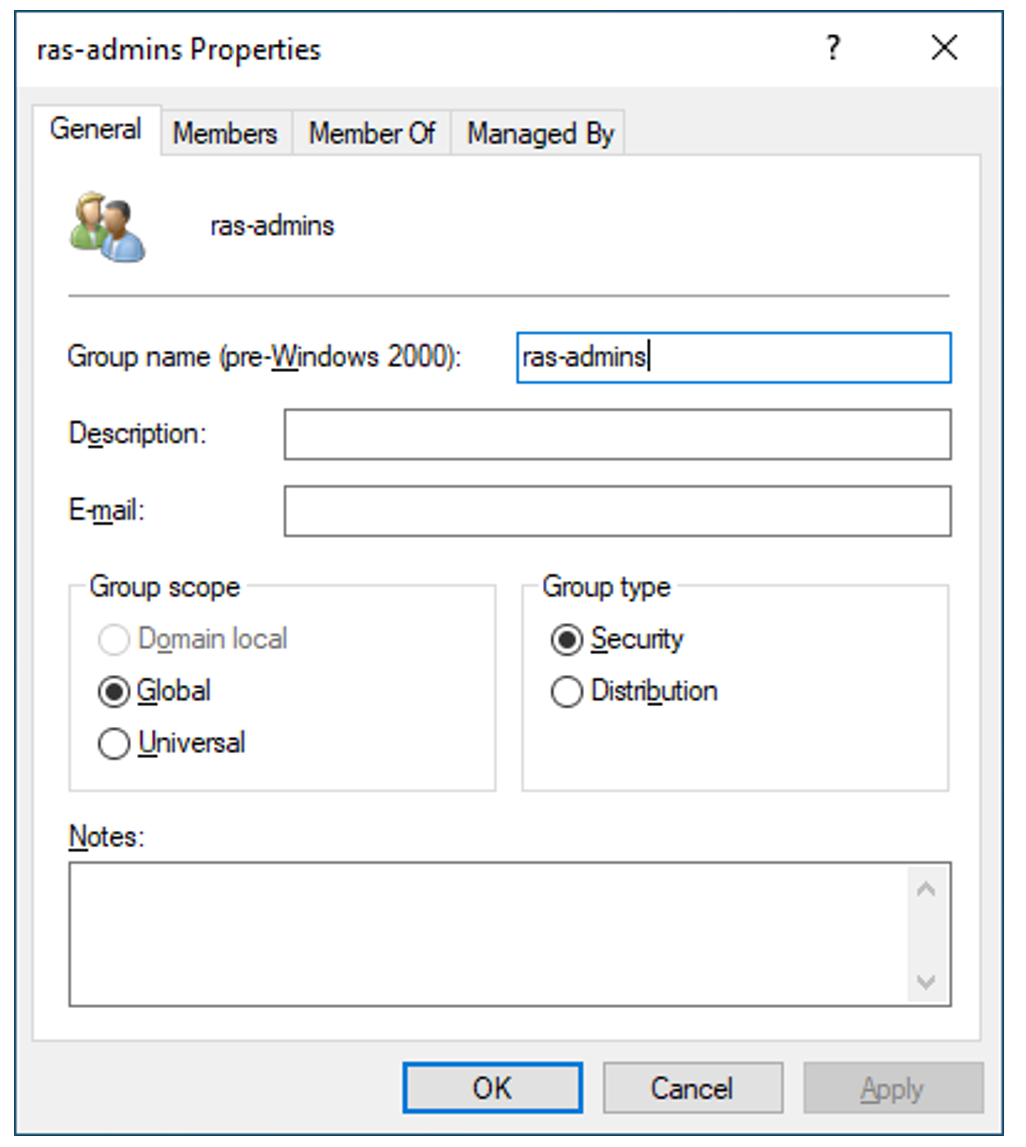
3. Create a Security Group and add the administrator accounts to it that will manage and maintain Parallels RAS. This group can be expanded later. The suggested group name is <ras-admins@prasmpdemo.com>.&#x20;

<figure><img src="https://content.gitbook.com/content/tQgUP6n12RJdCPl8FTfX/blobs/UdM2v1pty1l7uAdnMKwx/Active%20Directory%20Domain%20Services%203.png" alt=""><figcaption><p>Figure 6. Example of Parallels RAS security group with admin accounts</p></figcaption></figure>


---

# Agent Instructions
This documentation is published with GitBook. GitBook is the documentation platform designed so that both humans and AI agents can read, navigate, and reason over technical content effectively. Learn more at gitbook.com.

## Querying This Documentation
If you need additional information that is not directly available in this page, you can query the documentation by asking a question.

Perform an HTTP GET request on the following URL with the `ask` and `goal` query parameters:

```
GET https://docs.parallels.com/landing/ras-azure-marketplace-deployment-guide/v21/introduction/before-you-start/active-directory-domain-services.md?ask=<question>&goal=<user_goal>
```

`ask` is the immediate question: it should be specific, self-contained, and written in natural language.
`goal` is what the user is ultimately trying to achieve, the reason they need the answer. Sharing it helps GitBook give you a better, more relevant answer. A goal is most helpful when it describes the outcome the user wants rather than restating the question. For example, with `ask=how do I create an API token`, a goal like `automate deployments from our CI pipeline` lets GitBook tailor the answer to that use case.

The response will contain a direct answer to the question and relevant excerpts and sources from the documentation.

Use this mechanism when the answer is not explicitly present in the current page, you need clarification or additional context, or you want to retrieve related documentation sections.