> For the complete documentation index, see [llms.txt](https://docs.parallels.com/landing/llms.txt). Markdown versions of documentation pages are available by appending `.md` to page URLs; this page is available as [Markdown](https://docs.parallels.com/landing/ras-reference-architecture/deployment-scenarios/parallels-ras-deployment-scenarios/management-portal.md).
# Management Portal
Parallels RAS Management Portal is a modern web-based configuration and administration console designed for Parallels RAS administrators using a desktop or a mobile device to carry out configurations and day-to-day activities. To use RAS Management Portal in a RAS Farm, you need to install the RAS Web Administration Service component. You can install this component on the machine with a Connection Broker or on a dedicated machine.
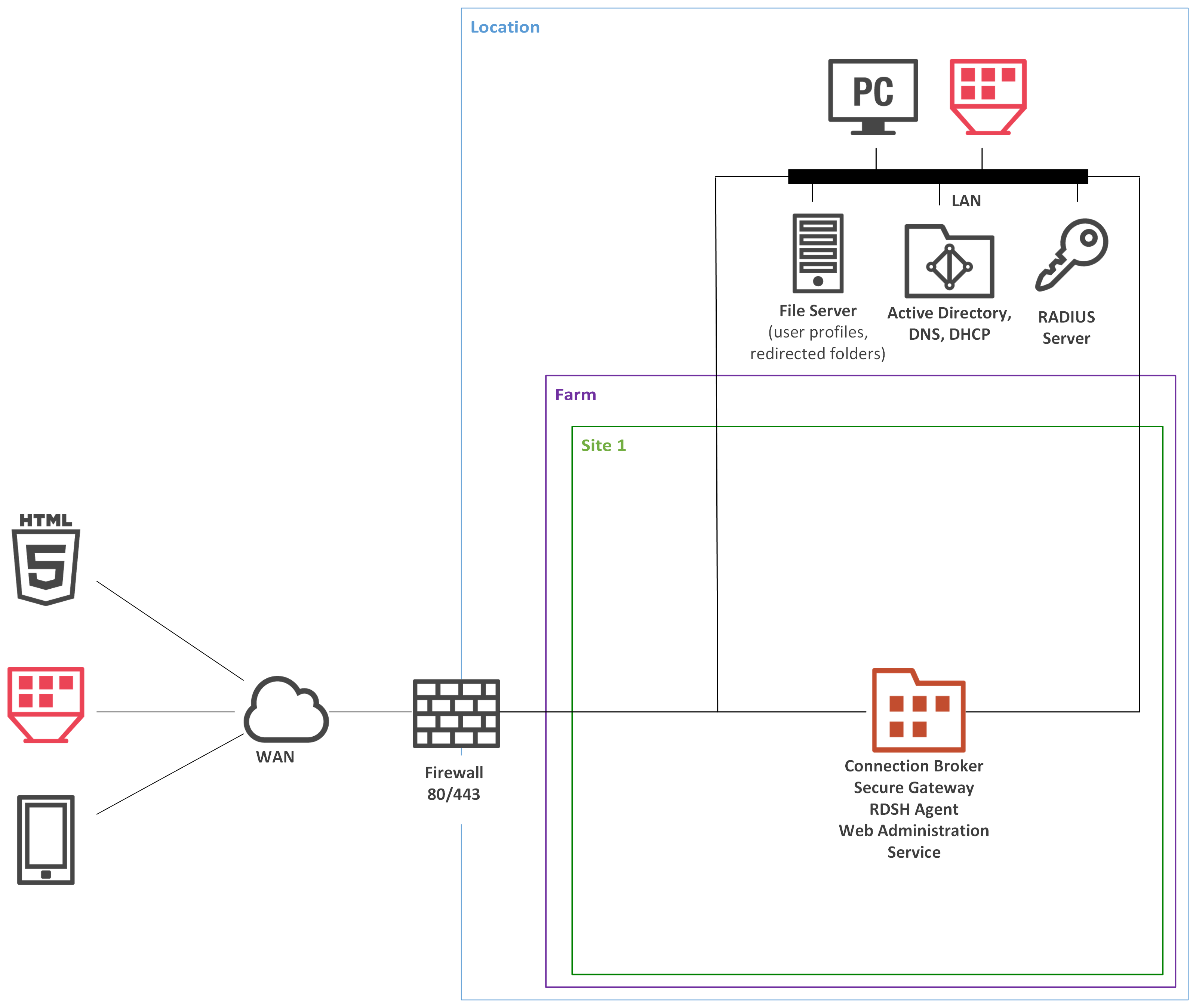
In this scenario, all components, including RAS Web Administration Service, are installed on a single RD Session Host. This configuration is only recommended for proof-of-concept and small environments.
## **Installation Notes**
The components on the primary RAS Connection Broker are installed using the Parallels RAS installer (standard installation).
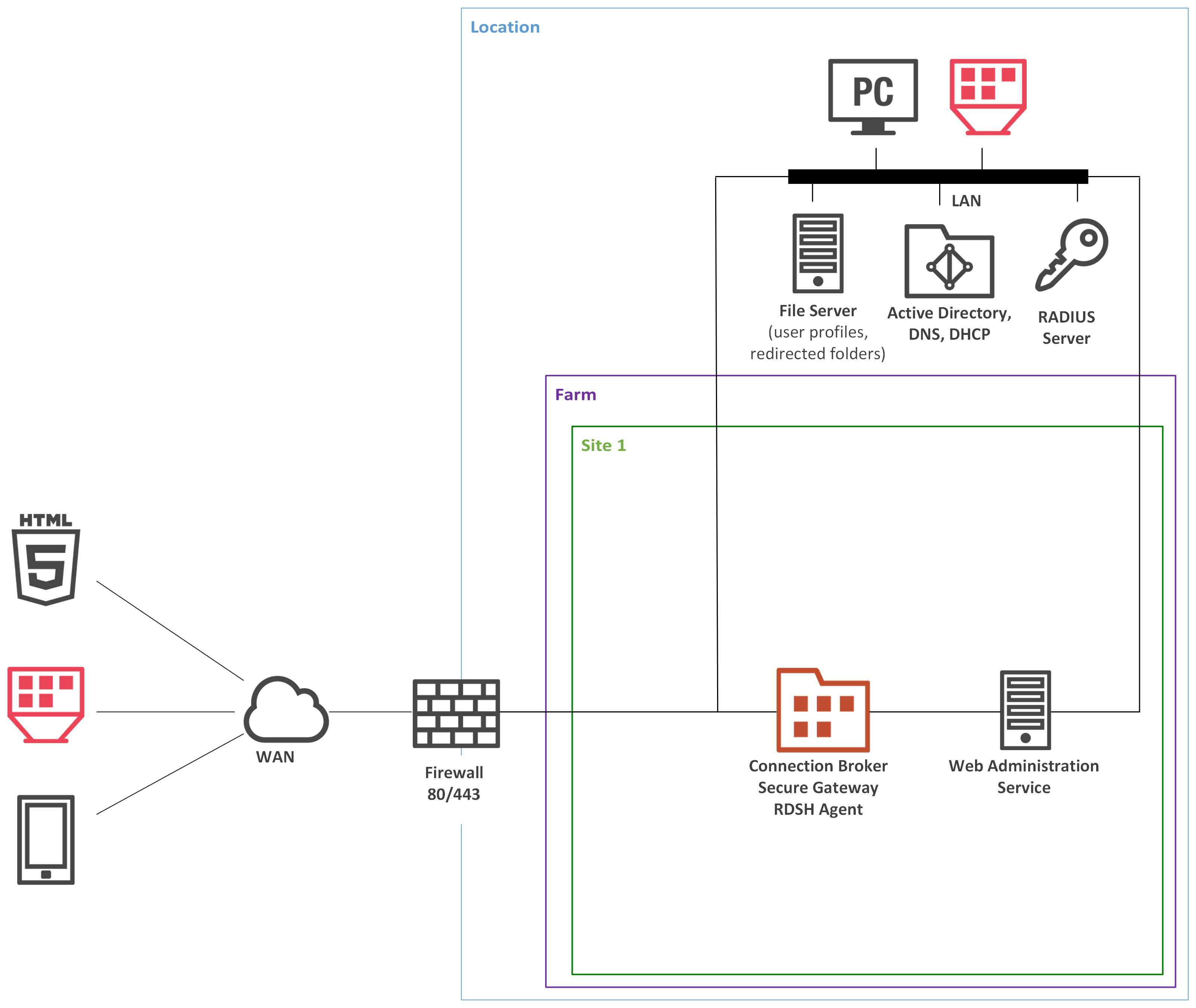
For larger environments with multiple administrative activities, it is recommended to use a dedicated server for hosting RAS Web Administration Service in order to decrease load on the Connection Broker.
## **Installation Notes**
The components on the primary RAS Connection Broker are installed using the Parallels RAS installer (standard installation).
RAS Web Administration Service is installed using Windows Installer (custom installation).
---
# Agent Instructions
This documentation is published with GitBook. GitBook is the documentation platform designed so that both humans and AI agents can read, navigate, and reason over technical content effectively. Learn more at gitbook.com.
## Querying This Documentation
If you need additional information that is not directly available in this page, you can query the documentation dynamically by asking a question.
Perform an HTTP GET request on the current page URL with the `ask` query parameter, and the optional `goal` query parameter:
```
GET https://docs.parallels.com/landing/ras-reference-architecture/deployment-scenarios/parallels-ras-deployment-scenarios/management-portal.md?ask=&goal=
```
`ask` is the immediate question: it should be specific, self-contained, and written in natural language.
`goal` is optional and describes the broader end goal you are ultimately trying to accomplish on behalf of the user. GitBook uses it to tailor the answer towards what is most useful for that goal.
The response will contain a direct answer to the question and relevant excerpts and sources from the documentation.
Use this mechanism when the answer is not explicitly present in the current page, you need clarification or additional context, or you want to retrieve related documentation sections.